Franco-German media artist Enkidu rankX [ınˈkiːdu ræŋk eks] was born 1972 in Saarbrücken / Germany. After his studies in Belgium he settled down in Berlin in 1996 where he is working and living up to this day. His work is comprised of video-art, glitch-art, installations and interaction with dance and theatre. “My art deals with issues such as relational miscommunication, the effect of technology on the human condition and the loss of identity that comes with the advent of virtualization an simulation.”
As Andy Warhol, the theoretician of pop art put it: „I just do art because I’m ugly and there’s nothing else for me to do.“ I this tradition and also with a very structuralist attitude towards a New Aesthetics DaDa I proclaim:
Sie sehen gerade einen Platzhalterinhalt von X. Um auf den eigentlichen Inhalt zuzugreifen, klicken Sie auf die Schaltfläche unten. Bitte beachten Sie, dass dabei Daten an Drittanbieter weitergegeben werden.
This is why I eagerly participate in it. Here, I wanted to show some results. The logic is simple. Go to the fb group, post an image and get glitched… Hope to collect more over time so stay tuned or contact me for your personal glitch.
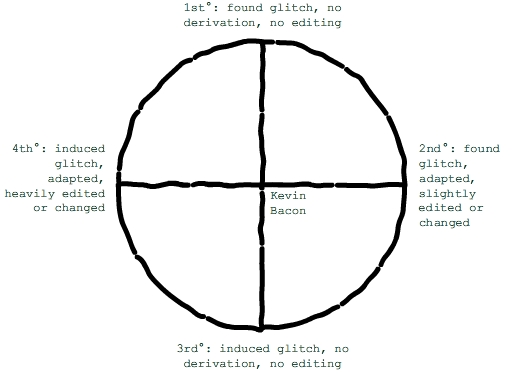
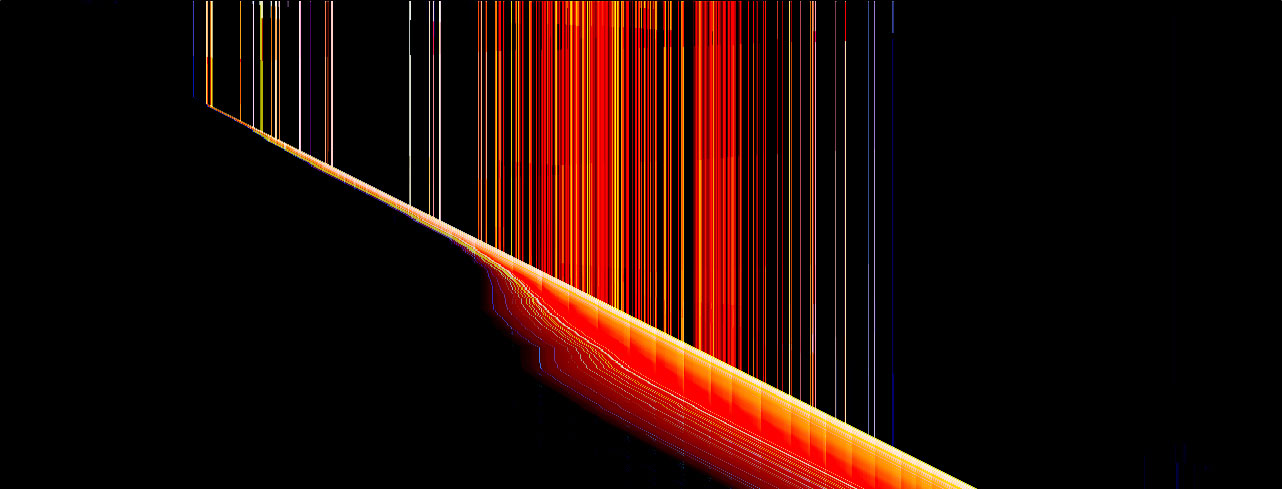
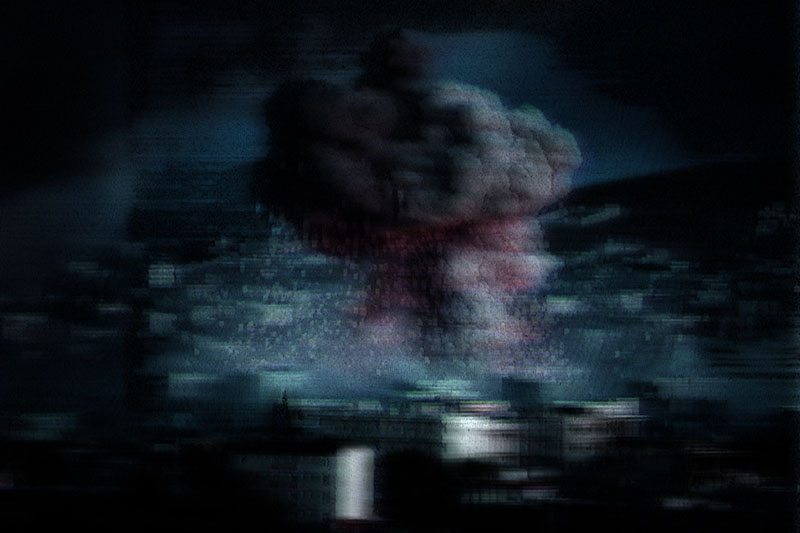
„The Battle for Kobane (03)“ glitch 4th°, 1282x489px, 2014 (original photo AFP / photographer unknown)
„The Battle for Kobane“ is a glitch art series that deals with the close relation mass media has with war. Let’s be honest: war brings us the most shocking, intense, horrifying, glorious and also beautiful images there are. You could paraphrase that war is the father (or mother) of all sujets since the earliest paintings and relief’s where about war and conflict. But that was in the old days when imagery was propaganda…
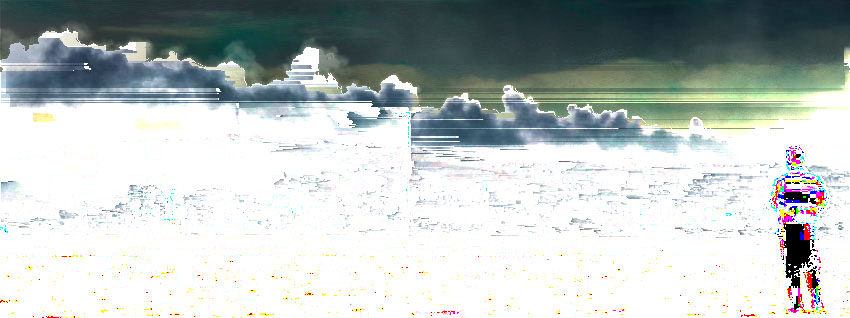
„The Battle for Kobane (02)“glitch 4th°, 850x318px, 2014 – original photo AFP / Aris Messinis
The mass-media-magnifying-glass this week focusses on Kobane. A small town in northern Syria that is only relevant to it because it is visible from a safe distance / border (with Turkey).
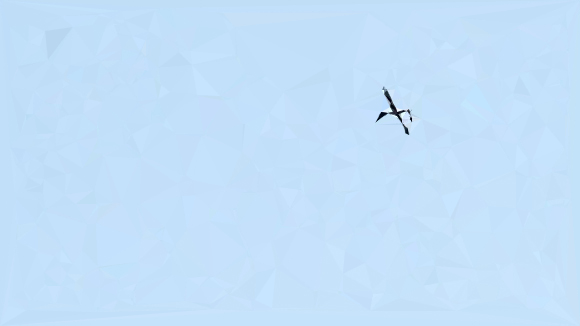
The Battle for Kobane (04) glitch 2nd°, 580x356px, 2014 original photo AFP / Aris Messinis
Hundreds of cities have been ravaged by fundamentalism in Syria and Iraq in these last months, no camera was present, newspapers & TV where slow to realize the tragedy that was going on. It was such a nice summer. But that’s how modern day mass media work. The need an iconic subject, a small world to exemplify and explain the big world to us…
„The Battle for Kobane (01)“ glitch 4th°, 800x533px, 2014 (original photo Getty Images / photographer unknown)
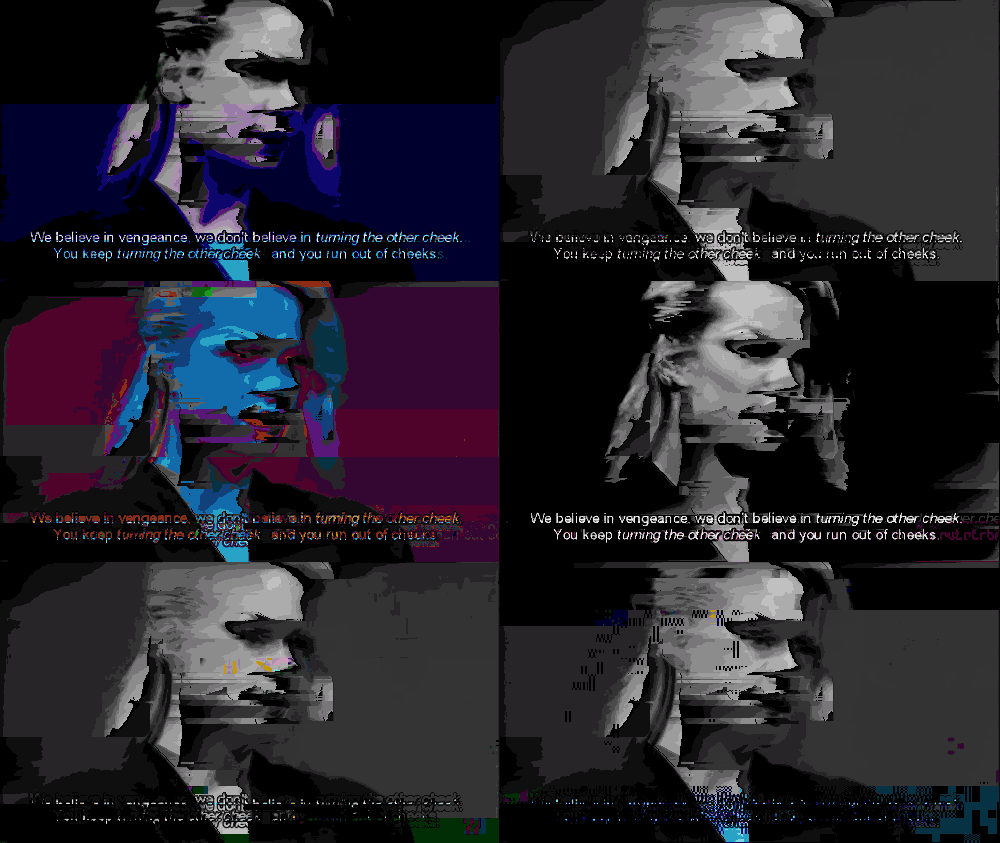
Zeena Schreck (born Zeena LaVey) glitched TV interview on tuning the other cheek
This is a submission to the Glitch Artists Collective group on facebook which I hold dear. The subject for the contest was / is „occult imagery“. So here I contribute Zeena Schreck, daughter to Anton LaVey (self declared founder of the Church of Satan). The Church is (in the US) an officially recognized institution which seems to be getting a bit dusty these days. But saying that I might conjure revange and terror from some of their members. Then again, satanists pride themselves on their sense of humour. So let’s test the devi hehe :p
Btw. I believe Zeena herself is not part of the church any more I believe, she dwells in tantric / typhonian traditions beyond classical Satanism.
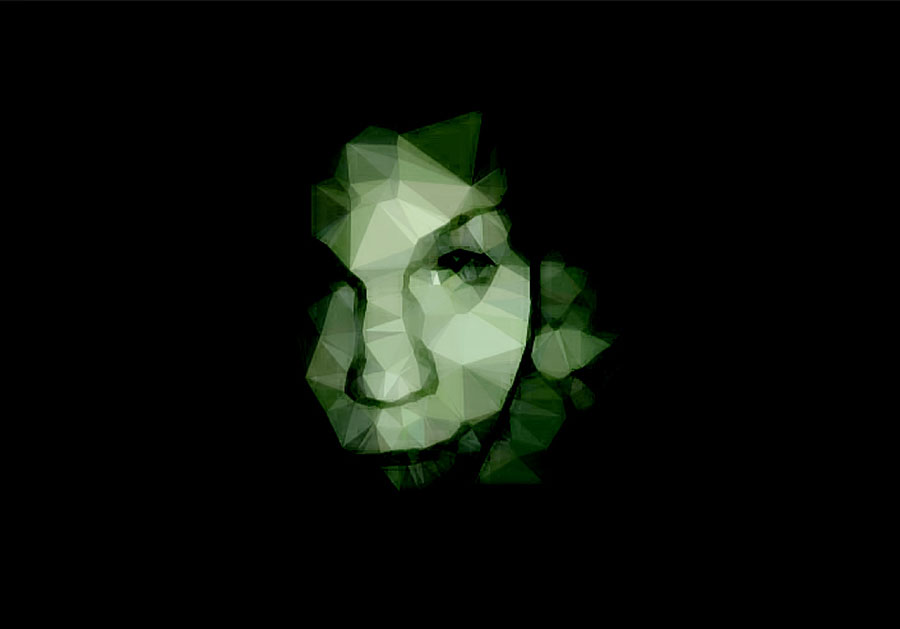
There is a distinct look expected of women in pornography. It is a devoted, slightly suffering and always pointed upward to the man. In this particular instance, the featured look is slightly to serene, too self sufficient to be acceptable to the macho man that is the porn stallion. It was the first image of my glitch art porn series „her_face“ and inspired the whole thing.
Sie sehen gerade einen Platzhalterinhalt von YouTube. Um auf den eigentlichen Inhalt zuzugreifen, klicken Sie auf die Schaltfläche unten. Bitte beachten Sie, dass dabei Daten an Drittanbieter weitergegeben werden.
“Narziss Maschine I” as shown at Lichtburg Forum Berlin Wedding
The Narziss Maschine (narcissus machine) is a PureData [pd] installation that uses a real-time camera feed. The video feed / frames are then chaotically rearranged and projected opposite of the viewer. Thus the audience becomes part of a movie but unlike a plain TV signal gets shown a feed that is constantly jumping forwards and backwards. The effect on the audience is an astounding one. People instantly start to react to their own image but unlike in a mirror, the random based frame reordering reflects a detached version of themselves.
This is part two of “how low can you go”, a series of animated GIF art that ask two questions. How low can you go in resolution & morals.
„how low can you go 04“ GIF animation, 300x176px, 2014
We are programmed, hard wired (by our neural network) to react to those colours and patterns of motion and shape, especially when it comes to primitive ‚content‘. I have always been interested in exactly that question: how low can you go and degrade a signal, an information, picture, sound, so it is still percievable as such – as structured information. Yet it is that border, the lowest visual/informational signal to noise ratio – that is what facinates me if you will.
„how low can you go 04“ GIF animation, 300x184px, 2014
„how low can you go 06“ GIF animation, 122x250px, 2014
„how low can you go“ is a series of animated GIF art that ask two questions. How low can you go in resolution & morals.
„how low can you go 01“ GIF animation, 294x176px, 2014
That is to still connect to the human aspect of the depiction / image. Do we recognize the male or female body within the pixels? What does the movement induce, is it enough to orientate us as to what we are watching? Or is it the flesh tones? What are we watching anyway? Is it porn, is it art and who cares anyway?
„how low can you go 02“ GIF animation, 294x176px, 2014
„how low can you go 03“ GIF animation, 294x176px, 2014
The mass-media-magnifying-glass this week focusses on Kobane. A small town in northern Syria that is only relevant to it because it is visible from a safe distance / border (with Turkey).
Hundreds of cities have been ravaged by fundamentalism in Syria and Iraq in these last months, no camera was present, newspapers & TV where slow to realize the tragedy that was going on. It was such a nice summer. But that’s how modern day mass media work. The need an iconic subject, a small world to exemplify and explain the big world to us…
Sie sehen gerade einen Platzhalterinhalt von Turnstile. Um auf den eigentlichen Inhalt zuzugreifen, klicken Sie auf die Schaltfläche unten. Bitte beachten Sie, dass dabei Daten an Drittanbieter weitergegeben werden.
Sie sehen gerade einen Platzhalterinhalt von Facebook. Um auf den eigentlichen Inhalt zuzugreifen, klicken Sie auf die Schaltfläche unten. Bitte beachten Sie, dass dabei Daten an Drittanbieter weitergegeben werden.
Sie sehen gerade einen Platzhalterinhalt von Instagram. Um auf den eigentlichen Inhalt zuzugreifen, klicken Sie auf die Schaltfläche unten. Bitte beachten Sie, dass dabei Daten an Drittanbieter weitergegeben werden.
Sie sehen gerade einen Platzhalterinhalt von X. Um auf den eigentlichen Inhalt zuzugreifen, klicken Sie auf die Schaltfläche unten. Bitte beachten Sie, dass dabei Daten an Drittanbieter weitergegeben werden.