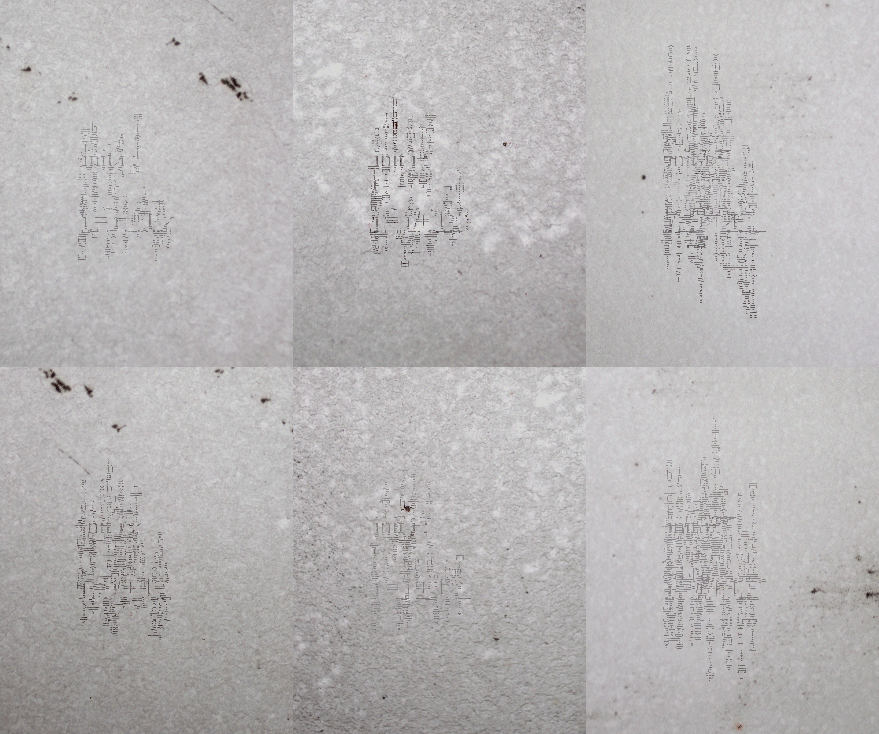
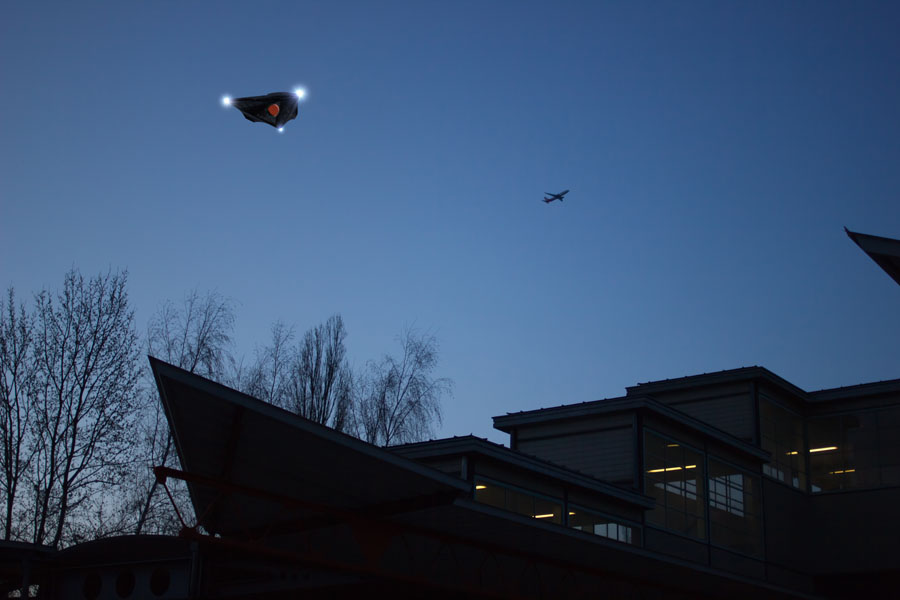
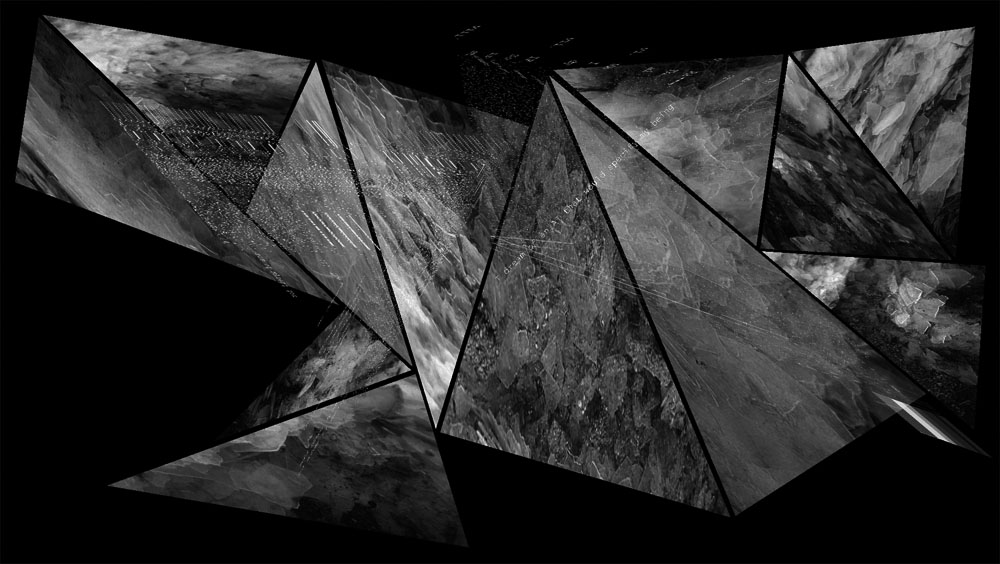
Franco-German media artist Enkidu rankX [ınˈkiːdu ræŋk eks] was born 1972 in Saarbrücken / Germany. After his studies in Belgium he settled down in Berlin in 1996 where he is working and living up to this day. His work is comprised of video-art, glitch-art, installations and interaction with dance and theatre. “My art deals with issues such as relational miscommunication, the effect of technology on the human condition and the loss of identity that comes with the advent of virtualization an simulation.”
Sie sehen gerade einen Platzhalterinhalt von YouTube. Um auf den eigentlichen Inhalt zuzugreifen, klicken Sie auf die Schaltfläche unten. Bitte beachten Sie, dass dabei Daten an Drittanbieter weitergegeben werden.
„Corvus corone cornix“ (DOGS III) supposes an imaginary setting in which a group of people isolate and exclude an individual via an answering machine. As part of the Series DOGS the film deals with mischief and mistrust within the realm of human relations.
Sie sehen gerade einen Platzhalterinhalt von YouTube. Um auf den eigentlichen Inhalt zuzugreifen, klicken Sie auf die Schaltfläche unten. Bitte beachten Sie, dass dabei Daten an Drittanbieter weitergegeben werden.
„border-traffic“ (DOGS IV) was shot on the border of Germany and Poland near Szczecin on a (pretty cold) road lined by prostitutes. It is the forth film of a series specially dealing in relational miscommunication called DOGS.
Leading up to my solo exhibition in autumn I am glad to introduce the website that will document the process of setting up the complex network of real and virtual art that is „the code is cold“.
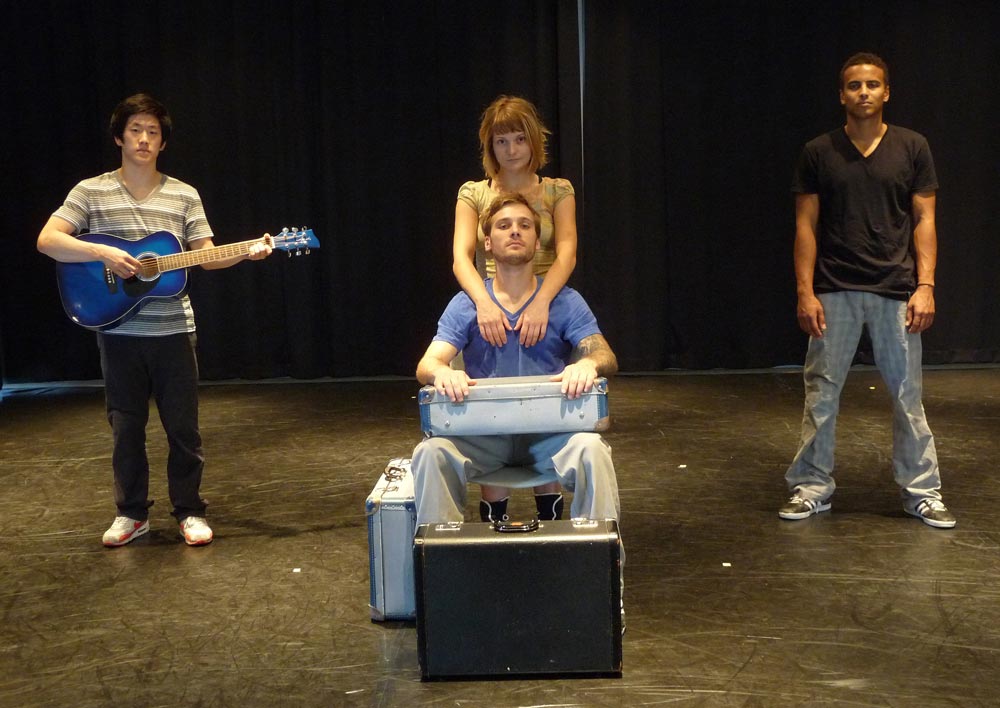
„As KooneCompany was chosen by the Goethe Institut Montreal for their Dance Residency Programm in summer 2011, we created the 1 hour length piece: „5 Degrees Of Separation“ . After the good work in Montreal we take the next step and show the premiere of the piece on the 3rd of november in Herne at the Kulturzentrum Herne… The premiere will be part of the well known „Pottporus Festival“ initiated by Pottporus e.V. / Renegade Theatre .“
RANKX-Funktion (DAX): RANKX(<table>, <expression>[, <value>[, <order>[, <ties>]]])
--->
Proving rank(℘(x))=rank(x)+
Enderton defines the rank of a set A to be the least ordinal α such that A⊆Vα (equivalently, A∈Vα+). He the derives the following identity: rank(A)=⋃{(rank(x))+:x∈A} for all sets A.
In Exercise 30 of Chapter 7, the reader is asked to prove several identities involving rank. For instance, that rank{a,b}=max(rank(a),rank(b))+. I am having trouble proving the second identity, that rank(℘(x))=rank(x)+ for all sets x. I am not sure whether I am missing some elementary identity that would let me prove the identity, or whether I am misunderstanding the definition of rank.
Clearly, z∈rank(℘(x))⇔(∃y)(y⊆x∧(z∈rank(y)∨z=rank(y)). On the other hand z∈(rank(x))+⇔(∃y)(y∈x∧z∈(rank(y))+)∨z=rank(x). I'm not sure why the first statement should imply the second, and conversely, however.
>> elementary-set-theory
--->
Sie sehen gerade einen Platzhalterinhalt von Turnstile. Um auf den eigentlichen Inhalt zuzugreifen, klicken Sie auf die Schaltfläche unten. Bitte beachten Sie, dass dabei Daten an Drittanbieter weitergegeben werden.
Sie sehen gerade einen Platzhalterinhalt von Facebook. Um auf den eigentlichen Inhalt zuzugreifen, klicken Sie auf die Schaltfläche unten. Bitte beachten Sie, dass dabei Daten an Drittanbieter weitergegeben werden.
Sie sehen gerade einen Platzhalterinhalt von Instagram. Um auf den eigentlichen Inhalt zuzugreifen, klicken Sie auf die Schaltfläche unten. Bitte beachten Sie, dass dabei Daten an Drittanbieter weitergegeben werden.
Sie sehen gerade einen Platzhalterinhalt von X. Um auf den eigentlichen Inhalt zuzugreifen, klicken Sie auf die Schaltfläche unten. Bitte beachten Sie, dass dabei Daten an Drittanbieter weitergegeben werden.